
Advanced Hearing Solutions for Complex Hearing Loss in Jacksonville
For patients with more advanced hearing loss, traditional hearing aids may no longer provide adequate benefit. Our Implant Program offers state-of-the-art surgical solutions designed to restore hearing, improve communication, and enhance quality of life.
Our team combines fellowship-trained otologic expertise with advanced audiology care to guide you through every step, from evaluation to surgery and long-term follow-up.
What Is a Cochlear Implant?
A cochlear implant is an advanced electronic device designed for individuals with moderate to profound hearing loss who receive little or no benefit from hearing aids.
Unlike hearing aids, which amplify sound, cochlear implants directly stimulate the auditory nerve, allowing the brain to perceive sound more effectively.

How Does a Cochlear Implant Work?
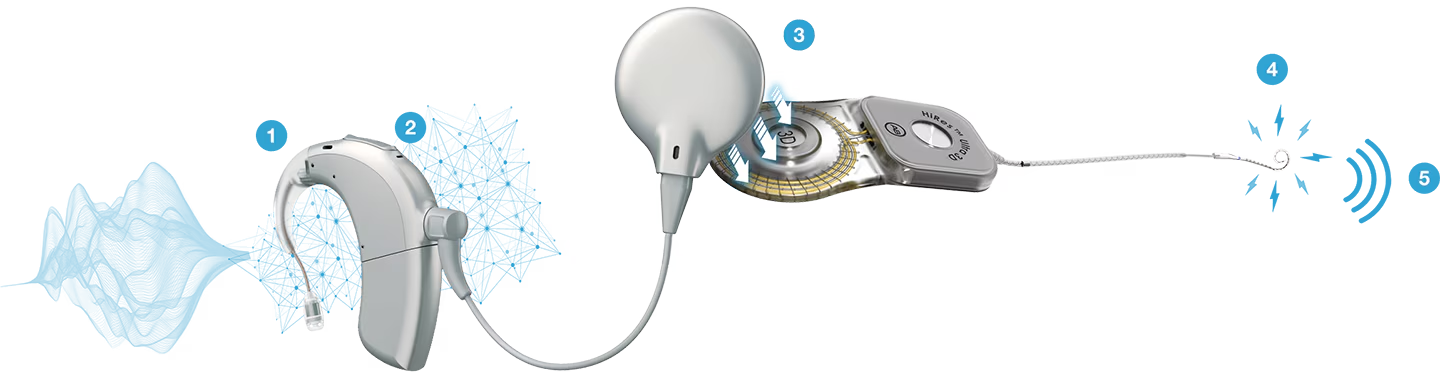
A cochlear implant has two main components:
-
External processor (worn behind the ear)
-
Captures sound and converts it into digital signals
-
-
Internal implant (placed under the skin)
-
Transmits signals to the auditory nerve
-
These signals bypass damaged structures in the inner ear and allow the brain to interpret sound.
Who Is a Candidate for a Cochlear Implant?
You may be a candidate if you have:
-
Moderate to profound hearing loss in one or both ears
-
Limited or no benefit from hearing aids
-
Healthy ear anatomy on imaging (CT or MRI)
-
Medical clearance for surgery
-
Realistic expectations about outcomes
Our cochlear implant team provides comprehensive testing and evaluation to determine candidacy for both adults and children.
What Is a Bone-Anchored Hearing Device (BAHA)?
A bone-anchored hearing device (BAHA) is a surgically implanted system that improves hearing by transmitting sound through bone vibration directly to the inner ear.
This technology bypasses the outer and middle ear, making it an excellent option for specific types of hearing loss.
How Does a BAHA Work?
The device works by:
-
Capturing sound externally
-
Converting sound into vibrations
-
Transmitting those vibrations through the skull bone
-
Delivering sound directly to the inner ear (cochlea)
This allows sound to reach the hearing system without relying on the ear canal or middle ear.
Who Is a Candidate for a BAHA?
A bone-anchored hearing device may be recommended for patients with:
-
Conductive hearing loss
-
Mixed hearing loss
-
Single-sided deafness (hearing loss in one ear)
-
Chronic ear conditions preventing use of traditional hearing aids
What Is the Difference Between a Cochlear Implant and a BAHA?
Understanding the difference is key to choosing the right treatment:
Cochlear Implant
-
Bypasses the inner ear
-
Directly stimulates the auditory nerve
-
Used for sensorineural hearing loss
-
Ideal when hearing aids are no longer effective
Bone-Anchored Hearing Device (BAHA)
-
Uses bone vibration to send sound to the inner ear
-
Bypasses outer and middle ear
-
Used for conductive, mixed hearing loss, or single-sided deafness
Why Choose Our Implant Program?
At ENT Specialists of North Florida, we offer a comprehensive, patient-centered implant program, including:
-
Advanced diagnostic testing and imaging
-
Multidisciplinary evaluation (ENT + Audiology)
-
Personalized treatment planning
-
Surgical expertise in hearing restoration
-
Long-term programming, rehabilitation, and follow-up
Our goal is to provide complete hearing solutions tailored to your needs.

Take the Next Step Toward Better Hearing
If hearing aids are no longer providing the clarity you need, advanced implantable solutions may help restore your ability to communicate and engage with the world around you.
Contact our Jacksonville office today to schedule a cochlear implant or hearing implant evaluation.
How a Cochlear Implant Works
A cochlear implant bypasses the damaged parts of the inner ear and directly stimulates the hearing nerve. An external sound processor captures sound and sends it to the implant, which converts it into electrical signals the brain understands as sound.
Implant & Hearing Systems We Offer
Our audiologists and surgeons work with leading implantable hearing technologies and will help you choose the system that best fits your hearing, lifestyle, and goals.
Candidacy for an implantable device is determined after a comprehensive evaluation with our audiology and surgical team.